Issue 9: Our Bold Imagination - From Investor to Super Investor
Sep 30, 2026
Dear friends, colleagues and mentors,
Imagine an investment becoming a living, breathing, thinking organism. Its information refreshes as new evidence arrives. Its memory preserves what was known and decided. Its analysis responds to changing conditions, with every number traceable to its supporting record.
You walk into an investment committee with leases, operating reports, site observations and market updates already connected. You can see which assumptions the investment rests on, how they have held up, and which missing fact would change your decision.
You still decide the investment view and the action. But you arrive with fresher evidence, more of it examined, and more of your assumptions tested.
That is what I mean by a super investor: an experienced professional whose ability to observe, question and remember extends beyond what one person - or one team - can reliably hold in mind.
Machine intelligence gives us new ways to build that capacity. And this market gives us a reason to begin.

Issue 8: The Highest and Best Use of Technology - A Reflection on Recent Natural Disasters
Aug 31, 2026
Dear friends, colleagues and mentors,
I was deeply saddened by the avalanche and flooding along the Nepal–Tibet border on August 26. The scale of the loss was difficult to comprehend. In a warming world, as glaciers and mountain communities face growing risks, I cannot stop asking: with all the technology and intelligence now available to us, what do we choose to use it for?
Satellite imagery, sensors, and AI can help us detect danger earlier. But detection alone is not enough. Information must become a warning; a warning must reach the people at risk; and communities must have the infrastructure and plans to act. Technology creates meaningful value only when it closes the loop between intelligence and human action.
I cannot answer this question for every industry. But I can begin with my own: real estate.
At its foundation, real estate investment value is derived from fundamental usefulness. A building has financial value because it first has a purpose in the real world: it gives someone a home, supports a business, enables an education, delivers care, connects goods with people or creates a place for a community to gather.
As financial investors, we often measure only the portion of that value captured through rent, occupancy and capital appreciation. But a building also affects physical and mental health, safety, time, sustainability, accessibility and the surrounding community. Technology’s greatest opportunity in real estate is not simply to make transactions faster or buildings more convenient, but to strengthen the intrinsic usefulness from which lasting investment value originates.
Primary purpose | Real estate | What technology should enable |
|---|---|---|
Live | Residential | More dignified homes using less land and fewer resources |
Work | Office | Healthier, more adaptable workplaces |
Make and move | Logistics and industrial | Safer, faster and more reliable movement of goods |
Learn and heal | Schools and healthcare | Better environments for essential human services |
Gather and experience | Retail and hospitality | Less waste and more meaningful human connection |
Compute | Data centers | More intelligence within environmental limits |

Issue 7: A Building Is Also an Experience
Jul 31, 2026
Dear friends, colleagues and mentors,
Hope you are enjoying a great summer. For this month’s newsletter, I want to talk about something light and cheerful: the experience side of real estate.
Two buildings can have the same location, similar specifications and nearly identical rents, but still feel completely different.
One lets you settle in immediately. You know where to go. The temperature feels right. The light is comfortable. Everything you need seems to appear before you have to look for it.
The other asks you to solve a series of small problems: an entrance that is difficult to find, a delivery process no one understands, elevators that take too long, or a meeting room that never quite works.
None of these frictions looks particularly important on its own. Together, they shape how people behave inside a building - and whether they want to return willingly.
A building is a physical structure. It is also an experience.

Issue 6: Making Real Estate Intelligence Transferable
Jun 30, 2026
Dear friends, colleagues, and mentors,
As we close 1H’26 and step into 2H’26, I want to write about a familiar moment in real estate.
An asset has been owned for years. It has been leased, financed, repaired, repositioned, argued over, and re-valued. Then it comes back to market.
The rent roll moves into a data room.
The leases move.
The operating statements move.
The capex schedule moves.
But how much of the asset’s accumulated intelligence moves with it?
Here is the question underneath it.
When an asset changes hands, what carries forward?
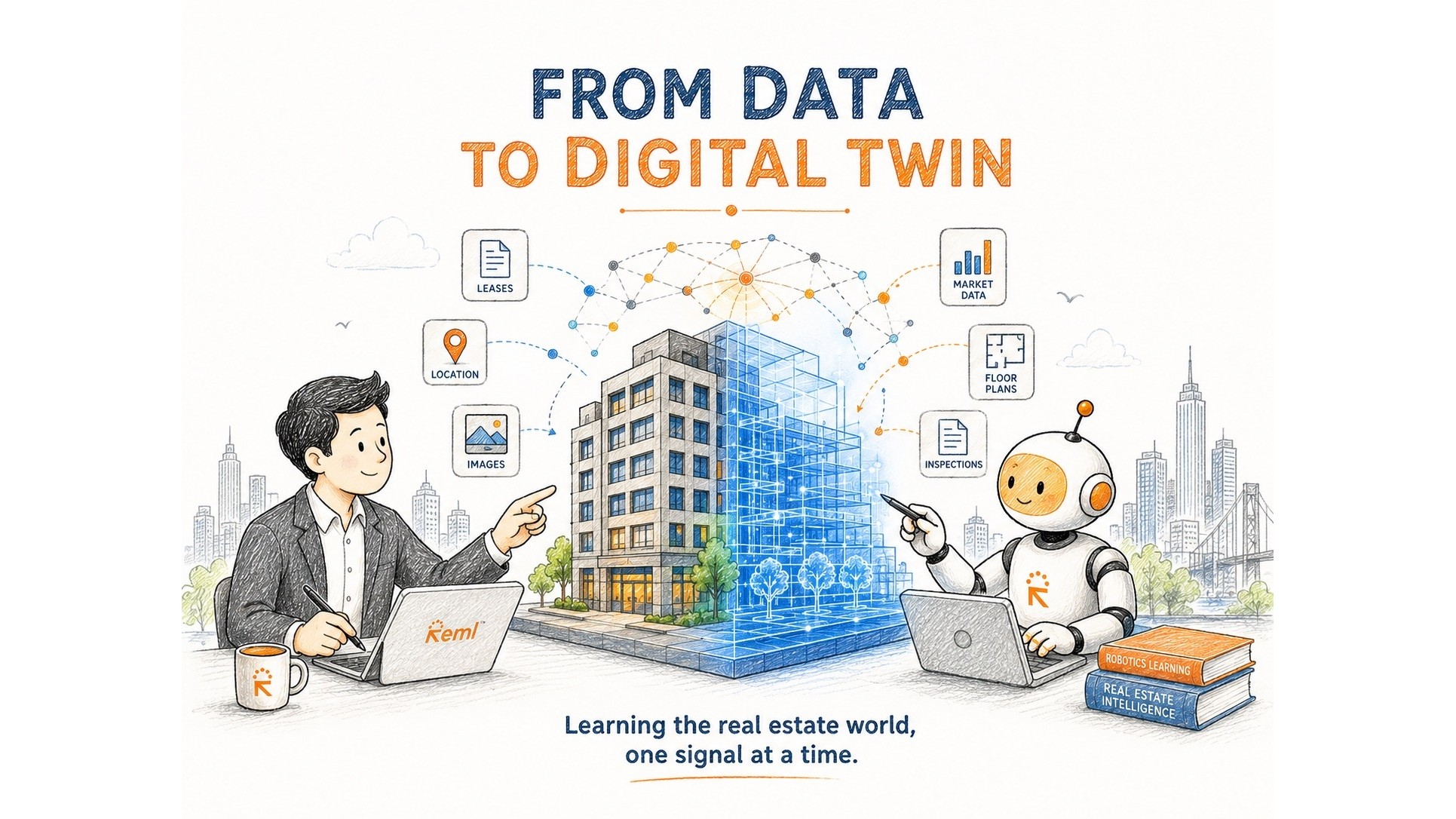
Issue 5: A Thought Experiment: From Digital Twins to Real Estate World Models
May 31, 2026
Dear friends, colleagues, and mentors,
Before the summer begins - and before the wave of IPOs that will, as always, send some noise through our markets, I want to set the current world aside and write about something further out: what real estate intelligence could become?
So treat this as a thought experiment. A clear-eyed piece of imagination about where machine understanding of real estate might ultimately go, written in the spirit of a research note rather than a product update.
Here is the question underneath it.
Usually, software treats a building as a fixed thing. A record. A rent roll. A valuation. A row in a spreadsheet. But no asset is fixed. A warehouse is shaped by its power capacity, its access to transport, the potential automation inside it, the zoning around it, and the tax and regulatory regime above it. An office is shaped by tenant demand, financing conditions, and the slow rewriting of how cities use space. Change any one of those, and the asset changes with it.
So what would it take for a machine to understand real estate not as a snapshot, but as a system that moves?
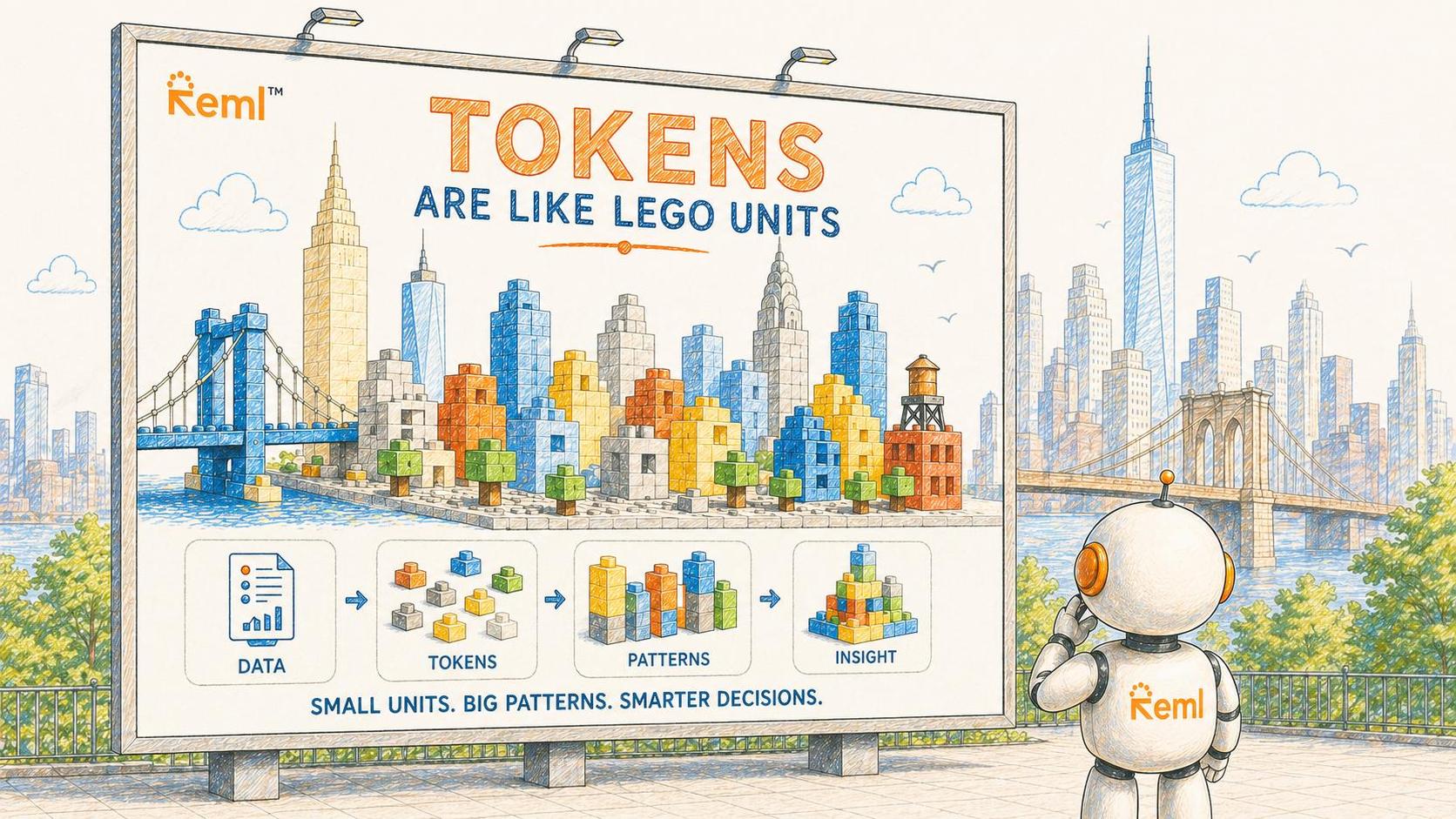
Issue 4: What Is a Token? — And Why That Question Matters
Apr 30, 2026
Building in Silicon Valley can feel like living inside a bubble.
Over time, it’s easy to forget that the rest of the world moves at a different pace — that what feels obvious here can feel abstract, even distant elsewhere. And that the growing gap in understanding technology is not just real, but increasingly a barrier to adoption.
A few weeks ago, I was traveling outside the U.S. I sat down with a friend — an experienced real estate investor, thoughtful, curious, and open to learning. We spent about twenty minutes discussing what we’re building and how it might support the industry.
Then he paused and asked:
“What is a token?”
It was a simple question. And a genuine one.
It stayed with me — not just in that moment, but later that evening, and on the 11-hour flight back to Silicon Valley.
Because beneath that question is something deeper:
A widening gap between how technology is built, and how industries understand, adopt, and trust it.
A gap we need to close — if we want progress to be shared, not siloed.
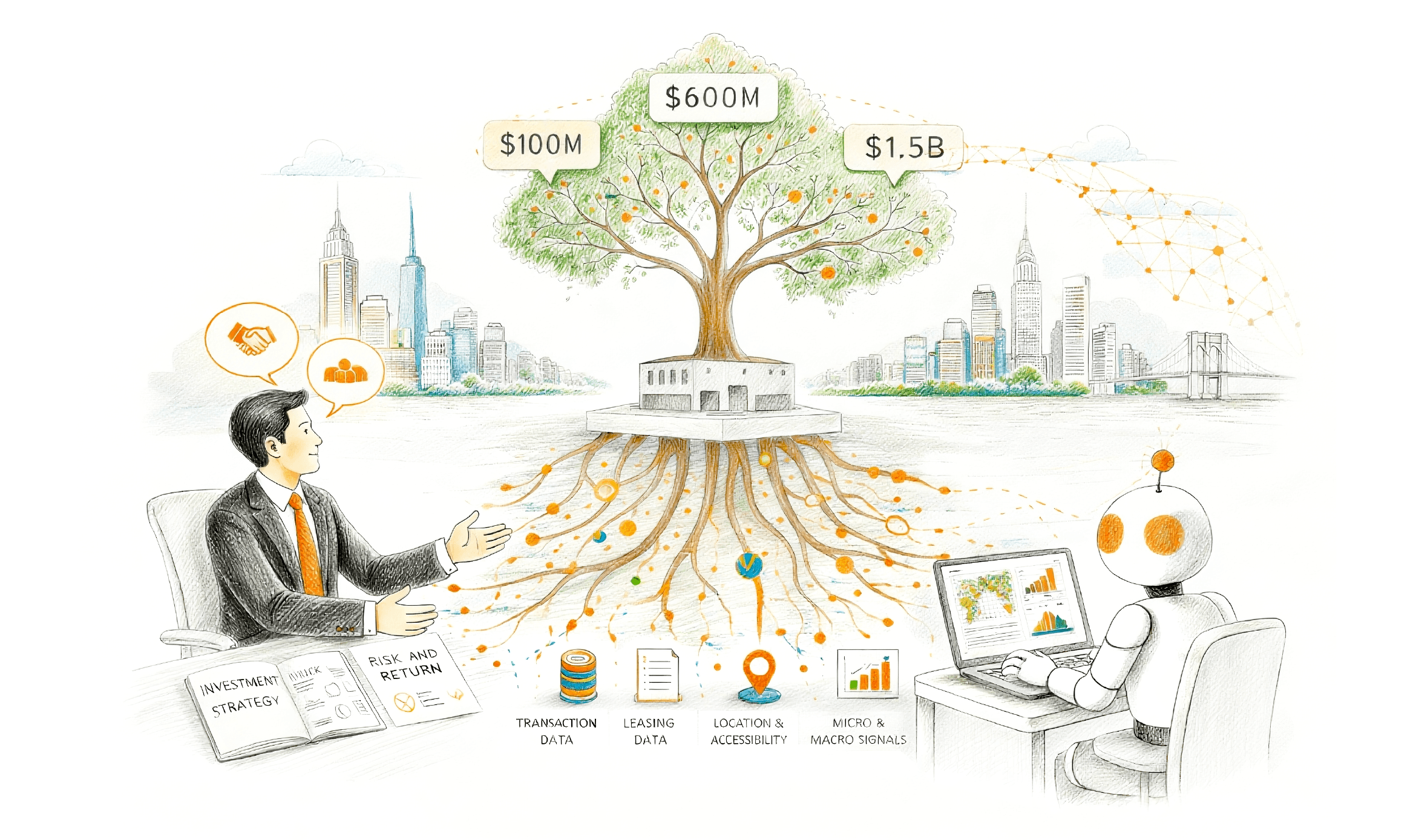
Issue 3: Rethinking How We Understand Asset Value in the Age of AI
Mar 29, 2026
A short note before we begin
Real estate investing has always involved forming judgment under uncertainty.
Over time, valuation frameworks emerge — shaped by experience, market cycles, and the collective memory of past decisions. As new data and analytical tools evolve, I have become increasingly curious about how these familiar approaches might also change.
This letter shares a personal perspective informed by recent academic research, industry observation, and the ongoing process of learning while building technology for the investment community.
These reflections are also shaping how we are thinking about product design at Reml — and we look forward to sharing more tangible examples in the coming months.
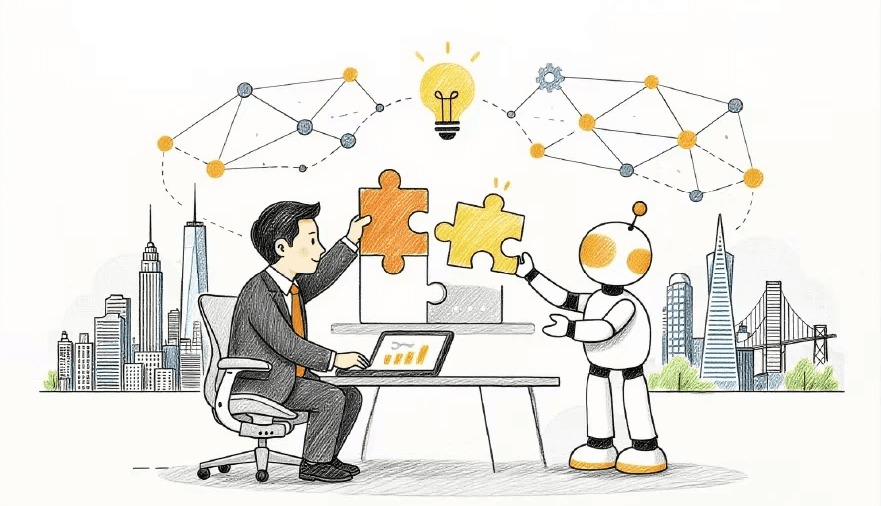
Issue 2: AI Won’t Replace Analysts — But It Will Redesign the Workflow
Feb 27, 2026
Welcome to The Reml Letter — a monthly note where I explore emerging technology and its real-world impact on investment decision-making.
This month, I’d like to explore why AI won’t replace analysts — and how it will redesign workflows in institutional real estate investing.
Issue 1: What 2026 Means for Al Agents in the Enterprise
Jan 27, 2026
Welcome to The Reml Letter — a monthly note where I explore emerging technology and its real-world impact on investment decision-making.
AI is not a finished product; it’s a learning journey. The technology is evolving quickly, and so is how it’s being applied. Through this letter, I invite you to learn alongside me — through observations shaped by building at the intersection of technology and industry.
I write from a dual vantage point: eight years in institutional investing, and now, building an AI company (Reml) in Silicon Valley. This letter is my attempt to bridge those two worlds — translating fast-moving technological advances into practical insight for an industry where decisions are high-stakes and judgment matters.
For this first issue, at the opening of 2026, I’d like to explore the current state of AI agents — and what effective, responsible deployment looks like in practice for institutional investors.