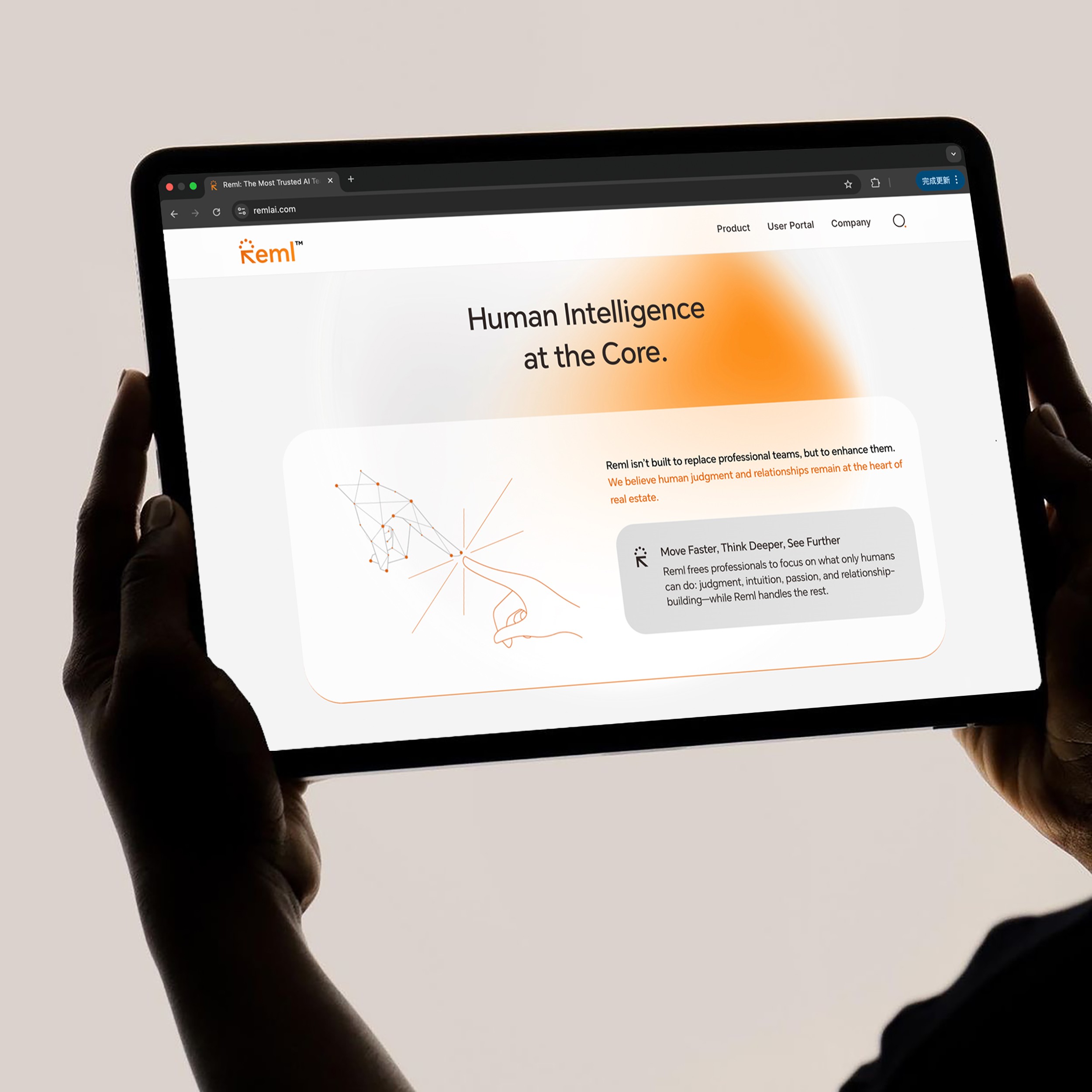

Welcome to The Reml Letter — a monthly note where I explore emerging technology and its real-world impact on investment decision-making.
AI is not a finished product; it’s a learning journey. The technology is evolving quickly, and so is how it’s being applied. Through this letter, I invite you to learn alongside me — through observations shaped by building at the intersection of technology and industry.
I write from a dual vantage point: eight years in institutional investing, and now, building an AI company (Reml) in Silicon Valley. This letter is my attempt to bridge those two worlds — translating fast-moving technological advances into practical insight for an industry where decisions are high-stakes and judgment matters.
For this first issue, at the opening of 2026, I’d like to explore the current state of AI agents — and what effective, responsible deployment looks like in practice for institutional investors.
AI Agents in 2026: What It Means for Professionals
Anthropic’s 2026 State of AI Agents Report makes one thing clear:
AI agents have crossed the threshold from experimentation to production infrastructure inside serious enterprises.
More than 80% of organizations already report measurable ROI, and nearly 90% expect returns to grow in 2026. The question is no longer whether to use AI agents, but how to deploy them effectively and safely. From the lens of institutional investing, three shifts matter most.
1. From assistance to delegation — automating with intelligence
Enterprises are no longer using AI just to “think faster.”
They are delegating complete tasks.
Anthropic’s data shows that 77% of enterprise AI usage involves full task handoff. Agents increasingly own multi-step workflows — research synthesis, reporting, documentation — while humans retain judgment and final sign-off.
This creates a two-way impact:
● Downward: eliminating low-value, repetitive work● Upward: amplifying human judgment, strategic thinking, and decision quality
This is not automation for cost-cutting alone. It is automation with intelligence — freeing professionals to focus on what humans do best.
In 2026, tools that only accelerate isolated tasks will feel incomplete. The real value lies in systems that carry work forward autonomously, while remaining reviewable and controllable.
2. Research and analysis are the first real unlock
While “vibe-coding” dominates headlines, the fastest-growing enterprise use cases are research, analysis, and reporting — prioritized by c.60% of large organizations.
This is not accidental. These workflows:
● Touch proprietary and regulated data● Require judgment and context● Are repeatable but historically labor-intensive
Anthropic highlights real-world deployments across industries — from financial institutions to global enterprises — where AI agents support continuous research, synthesis, and reporting under human supervision. For example, Norges Bank Investment Management (NBIM) reports c.20% time savings across teams, achieved through human-supervised AI analysis, not automated decision-making.
The pattern is consistent:
AI enters high-stakes domains first as continuous intelligence, not autonomous decisions.
3. Trust, security, and context — not models — are the bottlenecks
A critical takeaway for enterprise adoption is that model capability is no longer the primary constraint.
The real bottlenecks are:● Data quality and availability● Integration with existing systems● Governance, security, and compliance
Per Anthropic, every 1% increase in usable context improves output quality by c.0.38%. Without clean, structured, controlled data, even the strongest models underperform.
This is why leading enterprises should focus on:
● Architecture-level security, not bolt-on controls● Defense through design, including role-based access and continuous monitoring● Accuracy through cross-verification, retrieval-augmented generation (RAG), and controlled data sources
In professional investing, power without trust and compliance is unusable.
The current gap — and where 2026 is heading
Today, many organizations still treat AI as a workhorse rather than a teammate — focusing primarily on cost savings instead of strategic impact. Limited context and shallow integration cap AI’s effectiveness.
Enterprise adoption can be framed as an evolution:
1. Augmentation — AI assists humans
2. Automation — AI executes defined tasks
3. Automation with intelligence — AI adapts, reasons, and collaborates with humans and other systems
Most enterprises are transitioning from (1) to (2) today.
From 2026 onward, leaders will begin moving toward (3).
How enterprises should prepare
Based on observed best practices:● Understand the strengths and limits of current LLMs● Audit existing workflows to identify what AI should handle vs. what requires human judgment● Define the purpose and strategic end-goal of each AI agent before deployment● Integrate agents into priority workflows, with human-in-the-loop supervision, security, and compliance by design● Build trust through repetition, gradually delegating more responsibility as performance and reliability are proven
A useful mental model:
Train AI agents the way you would train an intern or new analyst — start side-by-side, review outputs, and expand scope over time. The difference is that AI learns continuously, operates 24/7, and improves with speed, consistency, and scale.